

How to Select the Right Lighting for Every Room in Your Home

Cougar Mountain Custom, Captured by Anastasiya Homes
Lighting has the power to completely transform a space. Even if you choose the finest materials and finishes, they can look underwhelming in a space with poorly designed lighting. On the other hand, thoughtful lighting can elevate even budget-friendly materials and make them feel luxurious. The right light can make a room feel warm and inviting, or stark and cold, depending on the color temperature and positioning of the light source.
Aside from aesthetics, lighting plays a huge role in the function of our homes. It’s crucial to assess how each room is used in order to design the best lighting layout and select appropriate fixtures. Taking consideration of how we move through the house helps determine where switching needs to be - we’ve all experienced fumbling with switches, struggling to find which switch controls which fixture. Lighting shapes not only how your home looks, but also how you feel and function in it.
Categories of Lighting
To create a well-balanced lighting plan, it helps to understand the three main categories of lighting:
Ambient lighting: Provides overall illumination for a room. This base layer of light can come from recessed fixtures, ceiling lights, sconces, pendants, or lamps.
Task lighting: Offers focused illumination for specific activities like cooking, reading, or working. Examples include under-cabinet lights, desk lamps, and reading sconces.
Accent lighting: Highlights architectural features, artwork, or design elements. Spotlights, directional sconces, and LED strip lighting are commonly used for this purpose.
A successful lighting design layers all three categories to create balance, flexibility, and atmosphere.
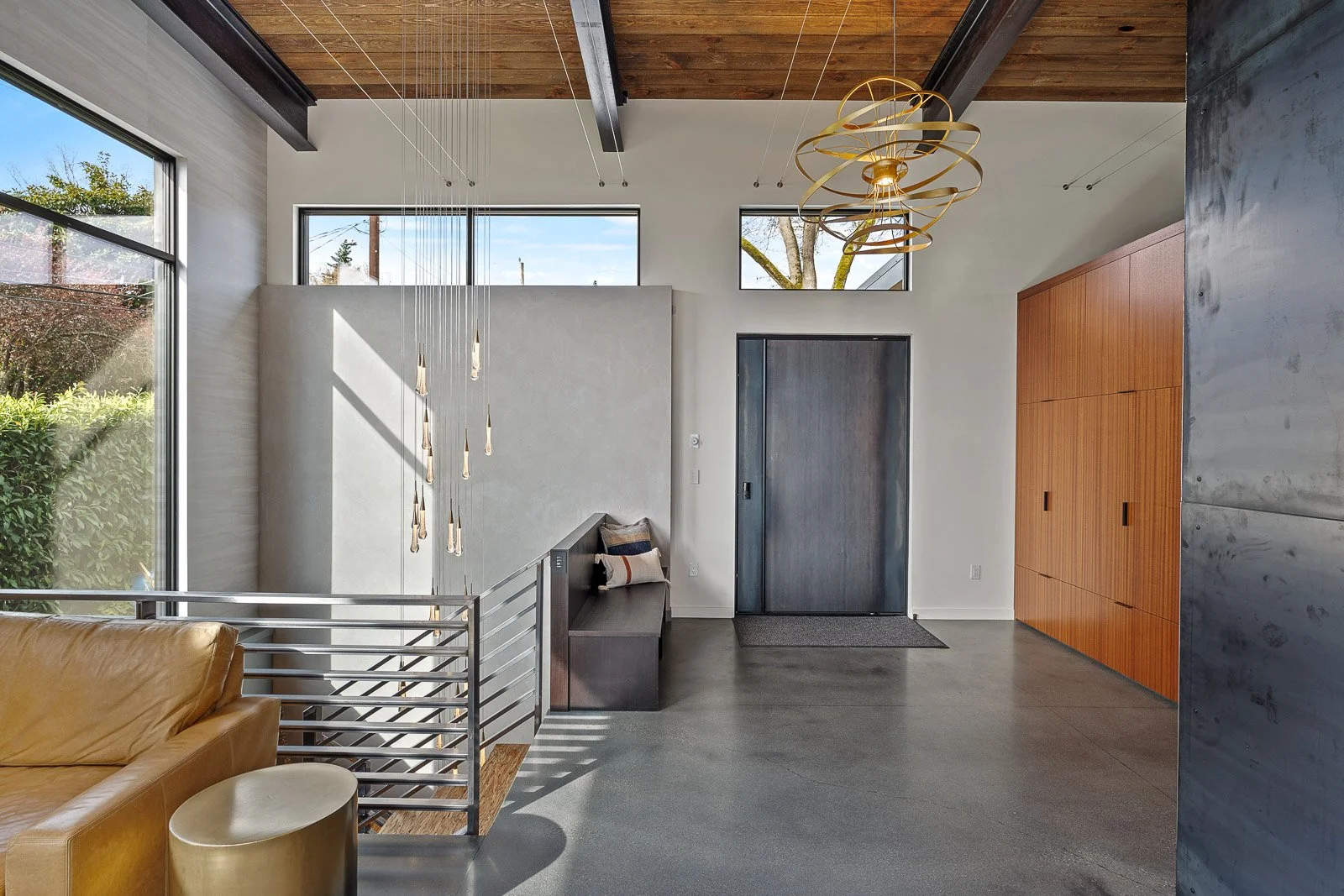
Seward Park Industrial, Captured by Christopher Nelson Photography
Types of Fixtures
Once you understand the categories of lighting, it’s easier to see how different fixture types can help achieve each one. Here are some of the most common fixtures you’ll encounter:
Recessed Downlights: Installed flush within the ceiling. Includes traditional recessed cans, canless LEDs, wall washers, spotlights, and recessed linear lights.
Ceiling-Mounted Fixtures: Surface-mounted lighting such as flush mounts, semi-flush mounts, pendants, chandeliers, and track or cable systems.
Wall-Mounted Fixtures (Sconces): Decorative and functional lights mounted directly to the wall.
Step Lights: Small, often recessed, fixtures installed in stair risers or side walls for safety and subtle accent lighting.
Undercabinet + Toe-Kick Lighting: Typically, low-voltage LED tape or rope lighting concealed beneath cabinetry.
Lamps + Plug-In Light Fixtures: Freestanding lights that add flexibility and style without permanent installation.
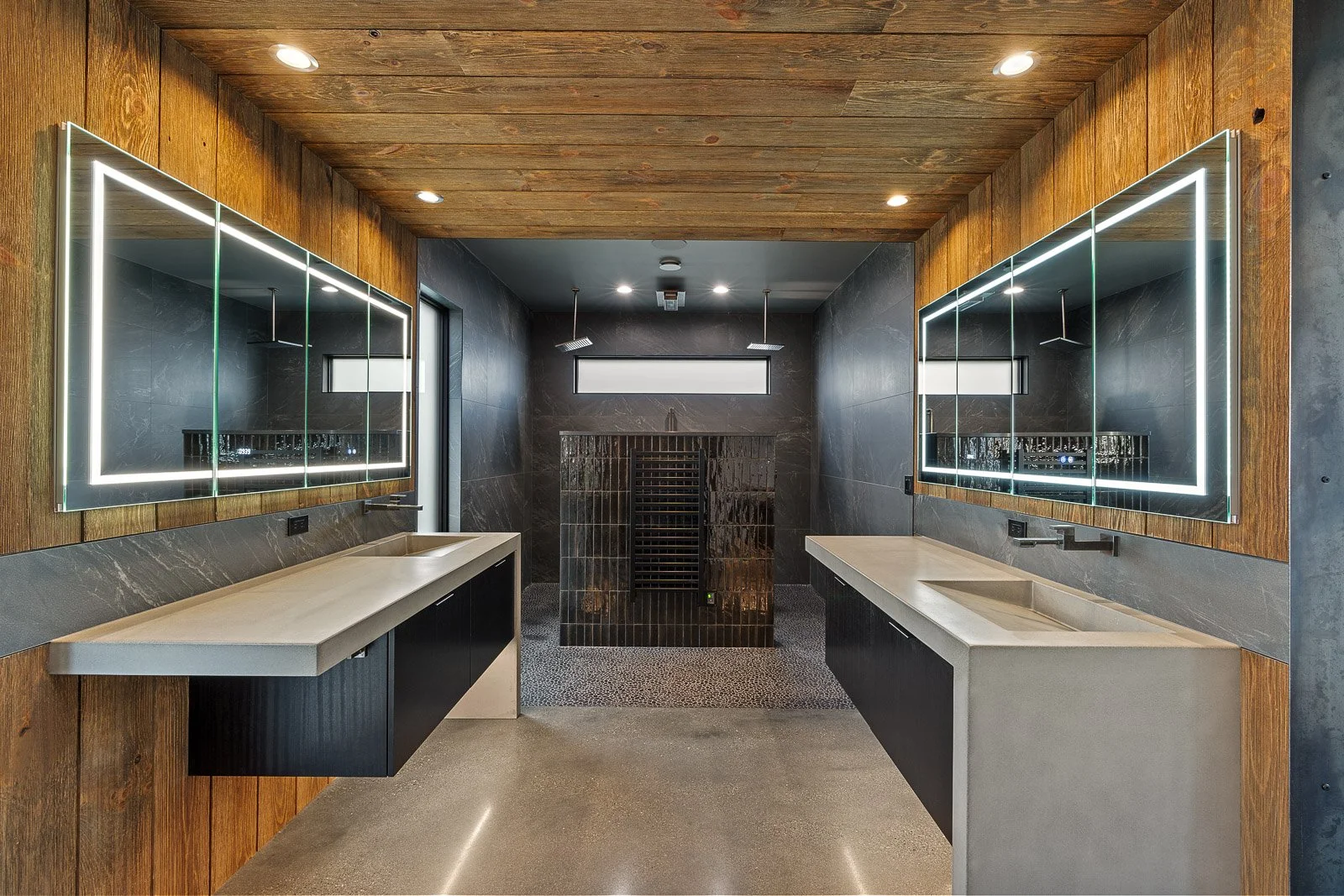
Seward Park Industrial, Captured by Christopher Nelson Photography
Key Qualities of Light
Let’s dive in a little deeper… Within each light fixture is a source – whether it be LED diodes or bulbs. Light sources have several key qualities to consider:
Intensity: AKA brightness, measured in lumens (total light output) or lux (amount of light on a surface)
Color: The Color Temperature (Kelvin) which describes warmth or coolness, and the Color Rendering Index (CRI) which measures how accurately a light source reveals true colors of objects
Direction: The path the light takes from the source to the subject
Contrast: The difference in illumination between the brightest & darkest areas in a space
Distribution: How the light is focused or spread across a surface or room
Texture: the perceived “feel” of the light, determined by the size of the light source relative to the subject. Hard light being from a small light source, creating sharp shadows, and soft light being from a large light source, creating diffused shadows.
Is all of this sounding a little complicated? This is where we come in.
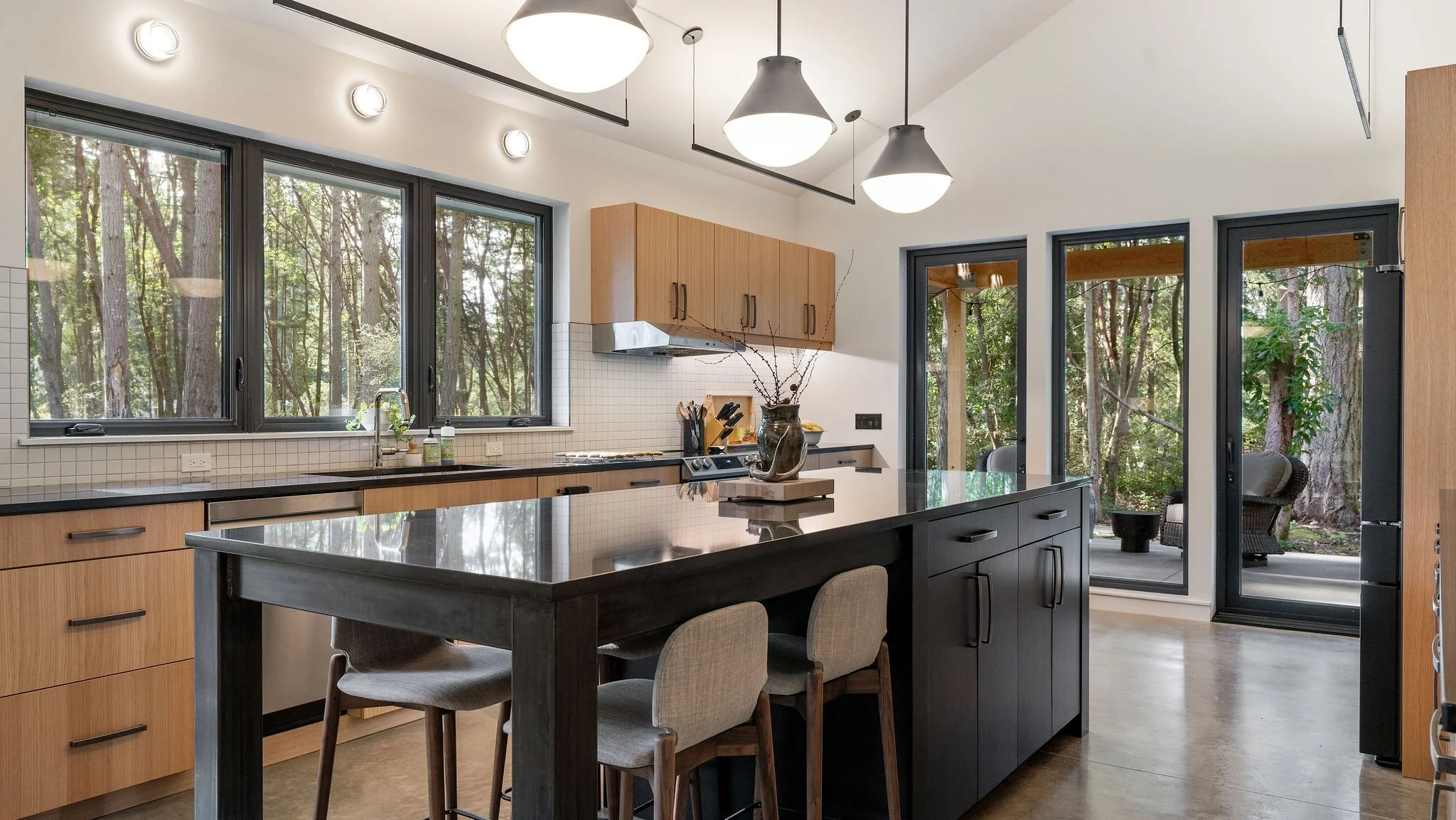
Whidbey High Performance Compact, Captured by Anastasiya Homes
Designing Lighting Layouts
The next step is translating this information into a cohesive lighting plan. At H2D, we begin by meeting with homeowners to discuss their needs and preferences for lighting and electrical. We then develop a room-by-room plan, layering ambient, task, and accent lighting. From there, we determine fixture placement and switching locations.
Switching
Switching is just as important as fixture selection. It determines not only where you can turn lights on and off, but also how they interact with one another. Considerations include:
Which fixtures are grouped together
Whether lights are controlled from multiple locations
Dimmer, timer, programmable, or smart switch options
Good switching design creates zones and layers, giving you flexibility. For example, you wouldn’t want your kitchen’s recessed lights, under-cabinet strips, and pendant lights all on a single switch—you need the ability to adjust layers depending on the time of day and activity.
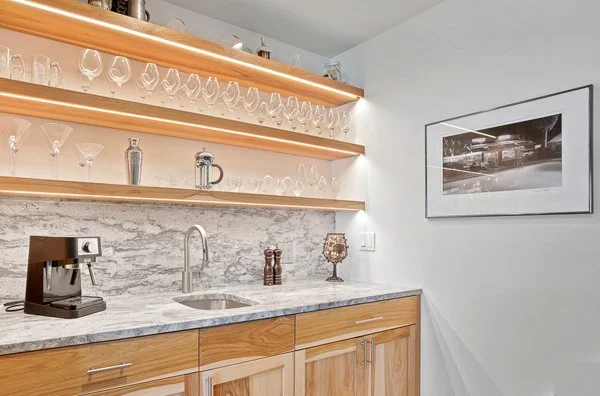
Edmonds Custom Build, Captured by Christopher Nelson Photography
Our Process
Once we draft a preliminary electrical plan, the designer and homeowners review together and discuss changes in an iterative process until the plan is finalized. At the same time, we help source and specify all fixtures, ensuring every item on the drawings corresponds to an actual product selection.
Our electrical plans also include locations for outlets, built-in speakers, security cameras, heated floors, and other equipment as needed. Once complete, the plans are sent to builders and electricians so that they can bid the project.
During construction, electricians perform a walkthrough at the rough-in stage. This allows adjustments based on structural realities (such as working around a floor joist or other framing member) and natural lighting conditions now visible in the framed home. Final tweaks are often made at this stage to achieve the best results. The designer is available to join these electrical walkthroughs to ensure the design intent is carried through.
Final Thoughts
Lighting is more than a finishing touch—it’s one of the most powerful tools for shaping how a home looks, feels, and functions. By layering ambient, task, and accent lighting, selecting the right fixtures, and thoughtfully planning switching, you can create spaces that are not only beautiful but also highly functional and adaptable. At H2D, we guide homeowners through every step of the process, from planning to fixture selection to on-site coordination, ensuring the end result reflects both style and comfort.